
Peter James Lynch, Divinity Student
- Mar 15
- 3 min read


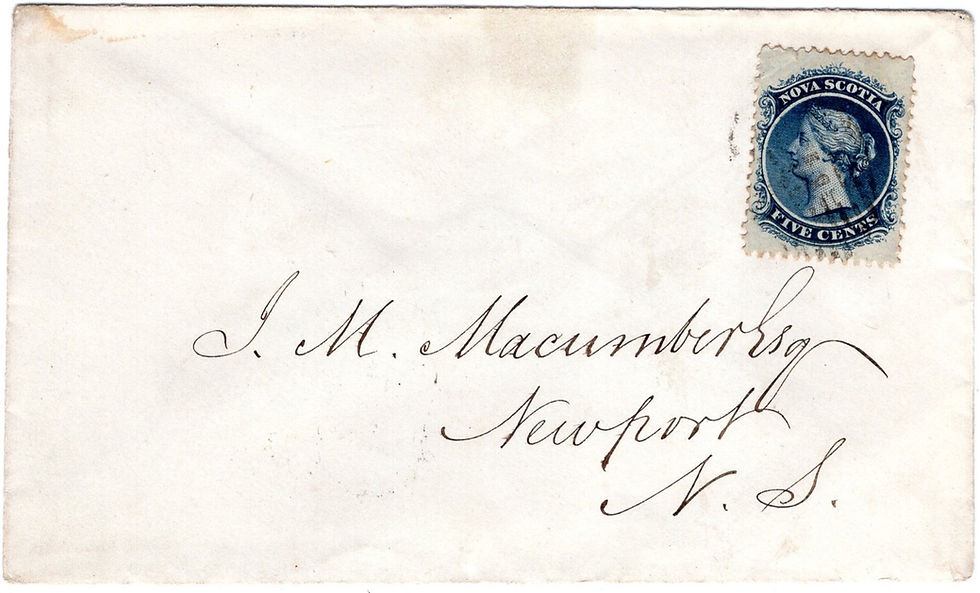
Peter James Lynch was a 19-year old student at King's College when he received this letter in 1863 from Halifax, possibly from family. He would die the following year at age 20. It was said of him that "At the time of his death, he was among the most prominent Theological Students of Kings College, and gave evidence of much intellectual ability."
The inscription on his gravestone in St. John's Cemetery and Columbarium, Halifax, reads,
"Here lie the mortal remains of Peter Lynch, Junr who having devoted his youth to God died at the early age of 20 years on the 10 June 1864 called from this world to receive the Crown of Life which The Lord hath promised for them that love him. Sorrowful yet rejoicing his Parents have erected this monument in the memory of their only Son."
Peter was born 7 April 1844 in Halifax, the son of Peter James Lynch, Q.C. and Charlotte Emma Creighton.
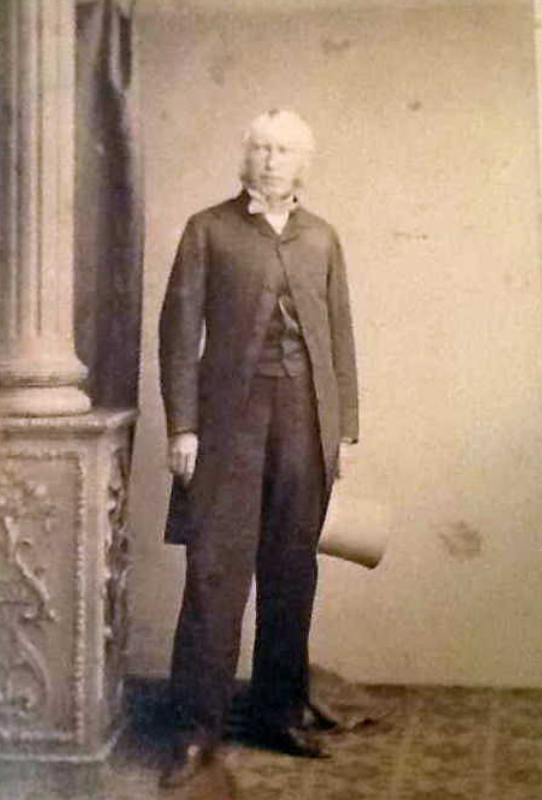
His father, Peter James Lynch, Q.C. was born in Halifax, on 25 August 1815 to Peter James Lynch, a merchant, and Sarah Hawthorne. Lynch was educated at the Halifax Grammar School under Rev. Dr. Charles Twining and was articled to Mr. J.W. Johnstone, who later became Judge in Equity. Lynch was called to the bar in October 1837 and was appointed Queen's Counsel in 1868. On 8 June 1841 he married Charlotte Emma Creighton (1818-1888), daughter of Alexander Creighton. They had two sons, Peter James and Alexander Creighton, who died in infancy on September 11, 1850, aged 7 months. Of their two daughters, Emma was born in 1852 and died just months before her father on 14 February 1893. Harriette married Lieut. A.E. Wilby and they had a son, Roger, born circa 1875; she died in London, England, ca. 1923. Lynch was involved in the Nova Scotia Historical Society, for which he wrote papers, such as “Early Reminiscences of Halifax” and “A Visit to Louisburg,” and acted as a member of the Publication Committee. Lynch also served as a vestryman and church warden at St. Paul's Anglican Church for many years and was one of the founders of the Halifax Young Men's Christian Association. He died on 22 May 1893.


Peter's grandfather, Peter James Lynch, Sr (1782-1848) was a Halifax merchant, who had been born in New York, or possibly Boston, the son of loyalist immigrants. He married Sarah Hawthorne (1786-1839) on 12 October 1811 in St. Matthew's Presbyterian Church, Halifax. They had three daughters and Peter, Jr. who was their only son. Peter Lynch was owner the Shallop "Partridge" registered in Halifax 1811.
Peter's great-grandfather, Captain Peter William Lynch was born around 1745 in Galway, Ireland and died in 1813 in Halifax (or Shelburne). A loyalist, he was settled in Shelburne after the American Revolution. Peter Lynch, "hatter", with his wife, 4 children and 8 servants is listed as one of the Port Roseway Associates. He received four grants of land there in 1784, and in 1785 received a grant of 2000 acres on McNutt's Island. On August 5, 1784, Peter Lynch was named one of the king's agents to assign lands to settlers and to report to the governor.
King's College
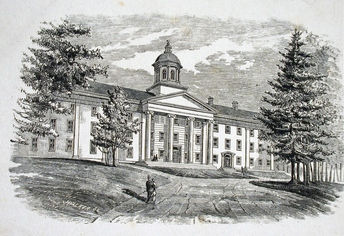
The University of King’s College, founded in Windsor, Nova Scotia, in 1789, was the first university to be established in English Canada. The college was the first in Canada to receive a charter and is the oldest English-speaking Commonwealth university outside the United Kingdom. But before the King’s College of Windsor came to be, there had already been one King’s College founded by King George II in New York in 1754, the school’s short life ended with the American Revolution, and the old King’s was later reorganized as Columbia University. Anglican Loyalists who moved to Nova Scotia in the wake of the Revolution, some among them with strong connections to the old King’s, founded the new King’s College in Windsor. The college then received its Royal Charter from King George III in 1802, which stated that King’s was to be “a College for the education of Youth in the Principles of true religion and for their instruction in the different branches of Science and Literature which are taught at our Universities in this Kingdom.” From the beginning, the University of King’s College was closely aligned with the Church of England, reflecting the political and religious principles of its Loyalist founders.


Comments